
Cast vs. Calendered Vinyl — and Where PPF Fits In
Calendered PVC
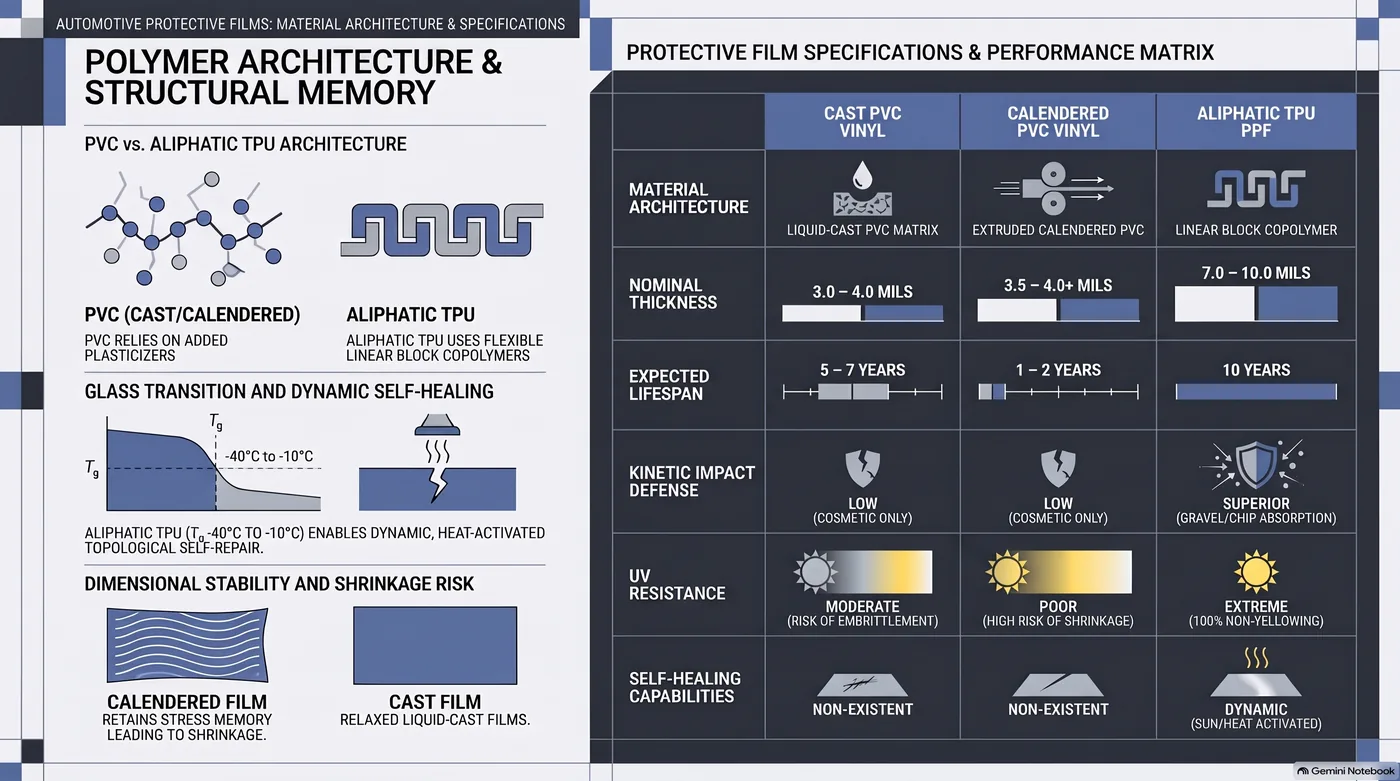
Calendered PVC is an extruded film measuring 3.5–4.0+ mils thick. Because it relies on liquid plasticizers for flexibility, UV exposure makes those plasticizers migrate over time, causing shrinkage, edge lifting and tenting in deep channels. It is built for flat surfaces and short-term fleet applications, with a roughly 1–3 year lifespan.
Cast PVC
Premium cast PVC is liquid-cast onto sheets at 3.0–4.0 mils, leaving it free of manufacturing stress before application. It conforms easily over compound curves and rivets, and delivers a 5–7 year lifespan when properly post-heated. This is the film behind most quality full vehicle wraps and color changes.
Aliphatic TPU PPF
Aliphatic TPU sits at the top of the stack at 7.5–10.0 mils, with a co-extruded, liquid-bonded nano-ceramic topcoat. It combines color transformation with heavy-duty rock-chip defense, permanent hydrophobicity (water contact angle above 105°), and dynamic self-healing over a 10-year service life.
The comparison
Calendered PVC suits short-term flat graphics, cast PVC dominates cosmetic color changes, and aliphatic TPU provides unmatched durability and self-healing for luxury and commercial vehicles. The right film depends on the vehicle, the look, and how long it needs to last — which is what a free quote helps sort out.
Ready to wrap?
Get a free, no-obligation quote for your vehicle — color change, fleet graphics or paint protection.
Call or text (239) 522-0096