
Why Vehicle Wraps Fail — and How Post-Heating Prevents It
The root cause: stored tension
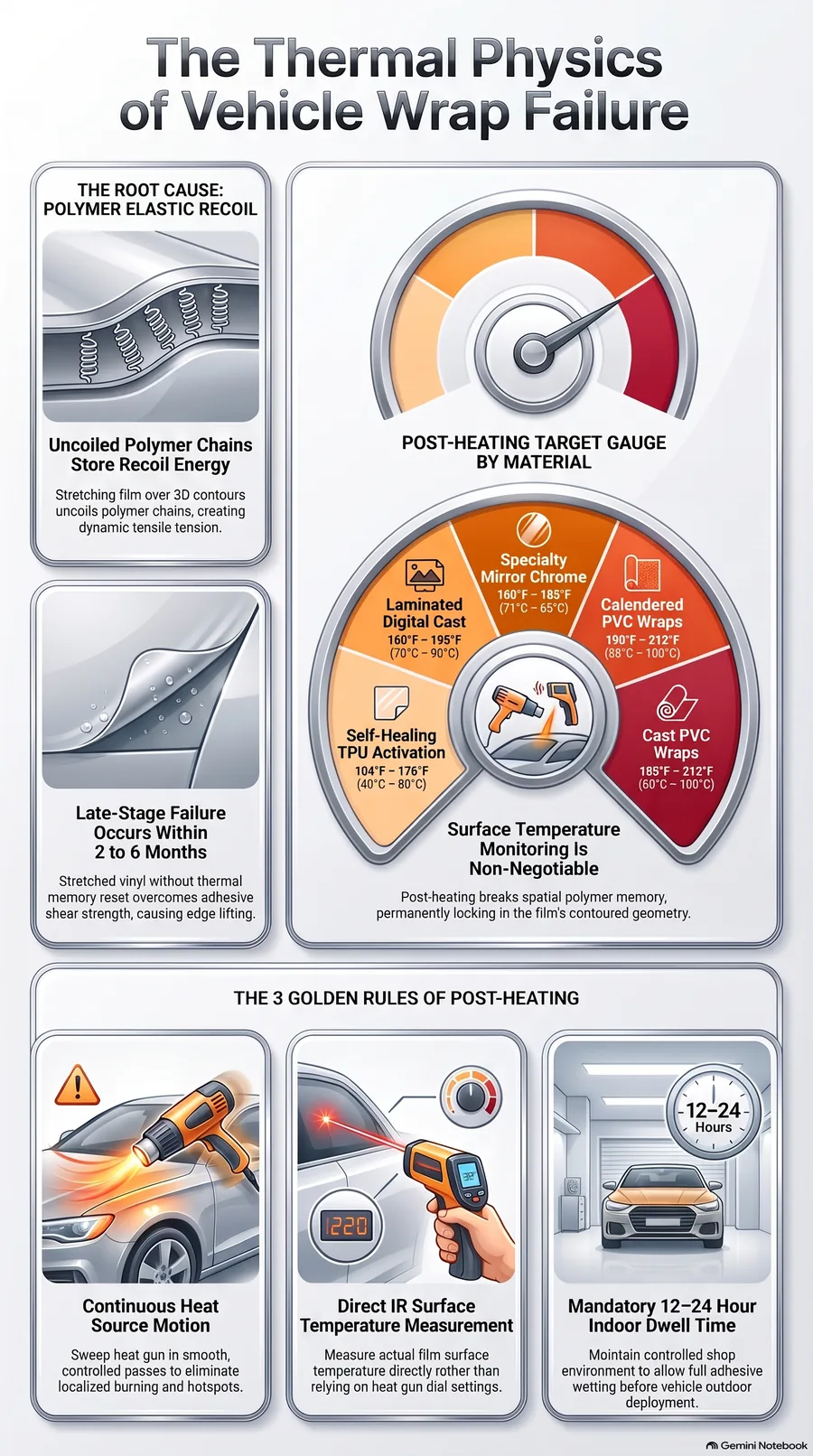
When thermoplastic vinyl is stretched over deep 3D contours, compound curves or bumper returns, its polymer chains uncoil and align along the direction of tension. That mechanical deformation stores elastic recoil energy inside the molecular network. Without proper thermal treatment, those uncoiled chains keep pulling, and the vinyl lifts or pops out of recesses over time.
Application heat vs. post-heat reset
Thermal processing has two distinct phases. During application, heating the film to 40°C–60°C (104°F–140°F) lowers its yield stress so it can conform over contours. But once positioning and squeegee passes are done, every section stretched beyond 10% must be post-heated to release stored elastic strain and permanently reset the material's memory to its new shape. This is where a full wrap stands or falls.
Target temperatures by film type
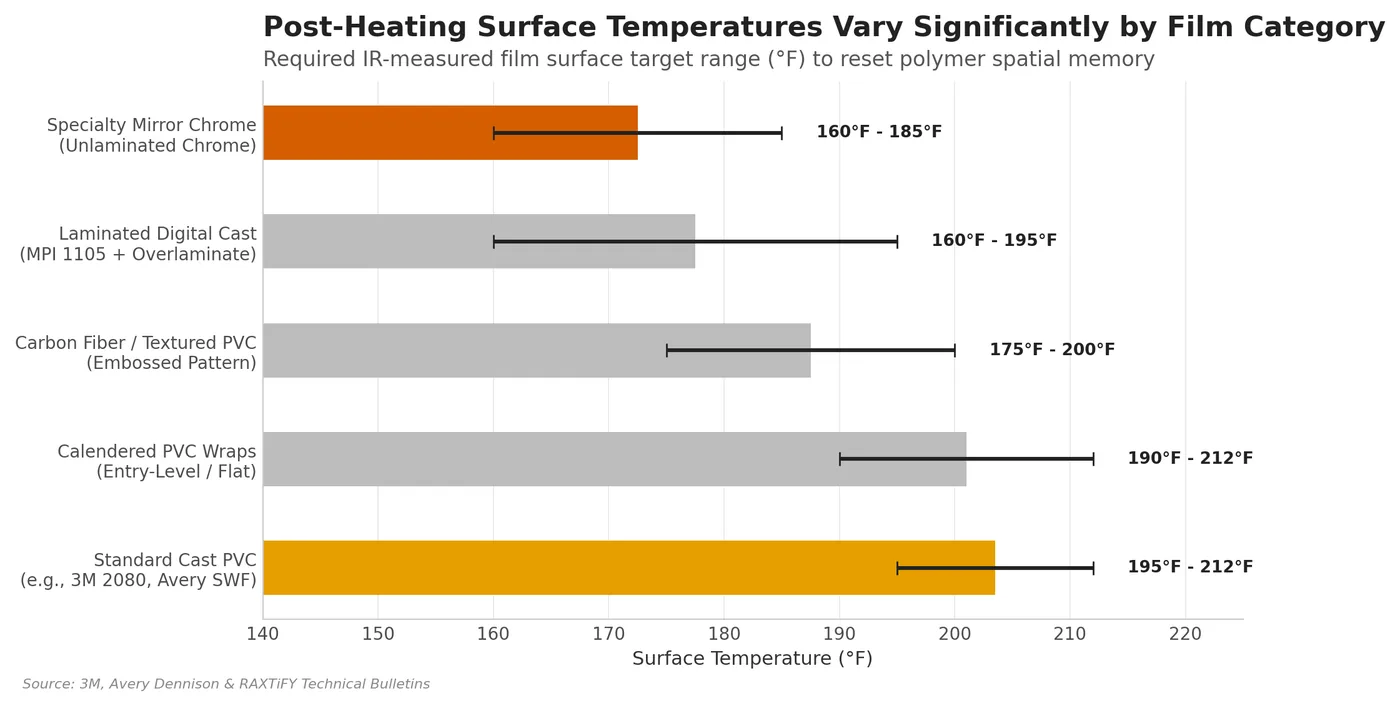
Post-heat targets depend on material chemistry. Standard cast PVC needs a surface temperature of 90°C–100°C (194°F–212°F), and 3M specifies a strict 94°C (201°F) minimum. Sensitive specialty films such as gloss silver chrome must stay within 71°C–85°C (160°F–185°F) to avoid destroying the mirror-like finish.
How the installer verifies the job
Never rely on the heat gun's dial — airflow, distance and panel substrate all change real heat transfer. A proper installer measures the vinyl surface directly with an infrared thermometer while keeping the heat gun moving continuously, then holds the vehicle indoors for a mandatory 12–24 hour setting period before it sees the road. This discipline is what separates a color change that lasts from one that lifts.
Ready to wrap?
Get a free, no-obligation quote for your vehicle — color change, fleet graphics or paint protection.
Call or text (239) 522-0096