Macromolecular Armor: The Chemistry Behind Aliphatic TPU PPF
Aromatic vs. aliphatic: the yellowing war
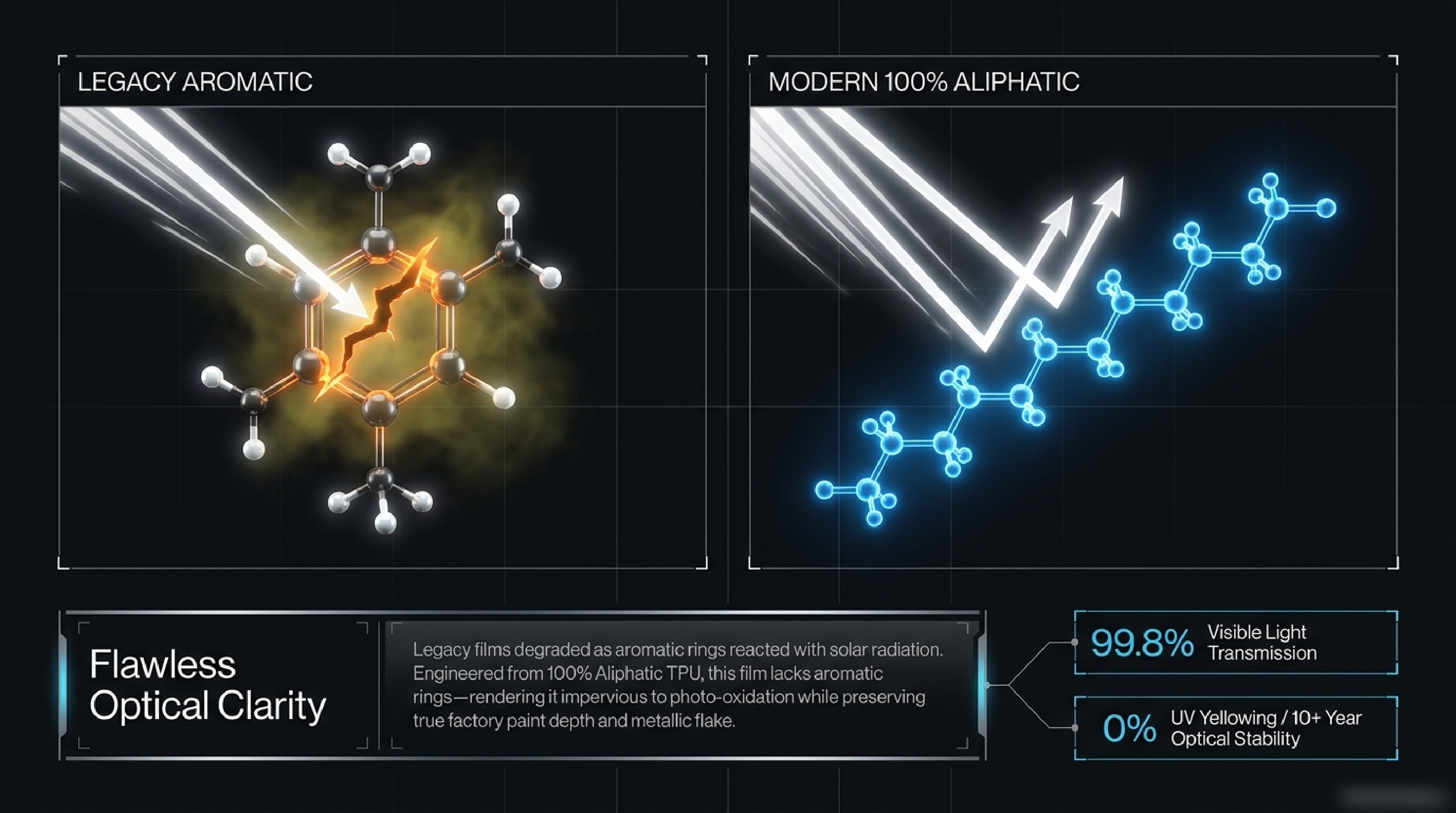
Legacy PPF films degraded because their aromatic rings reacted with solar radiation, turning the film yellow within a couple of years. Modern 100% aliphatic TPU removes those aromatic rings entirely, making the film impervious to photo-oxidation. The result is 99.8% visible light transmission, zero UV yellowing over a 10+ year lifespan, and true factory paint depth and metallic flake preserved under a flawless, glass-like finish. Paint protection film in Tampa lives or dies on this chemistry.
The dual-segment architecture
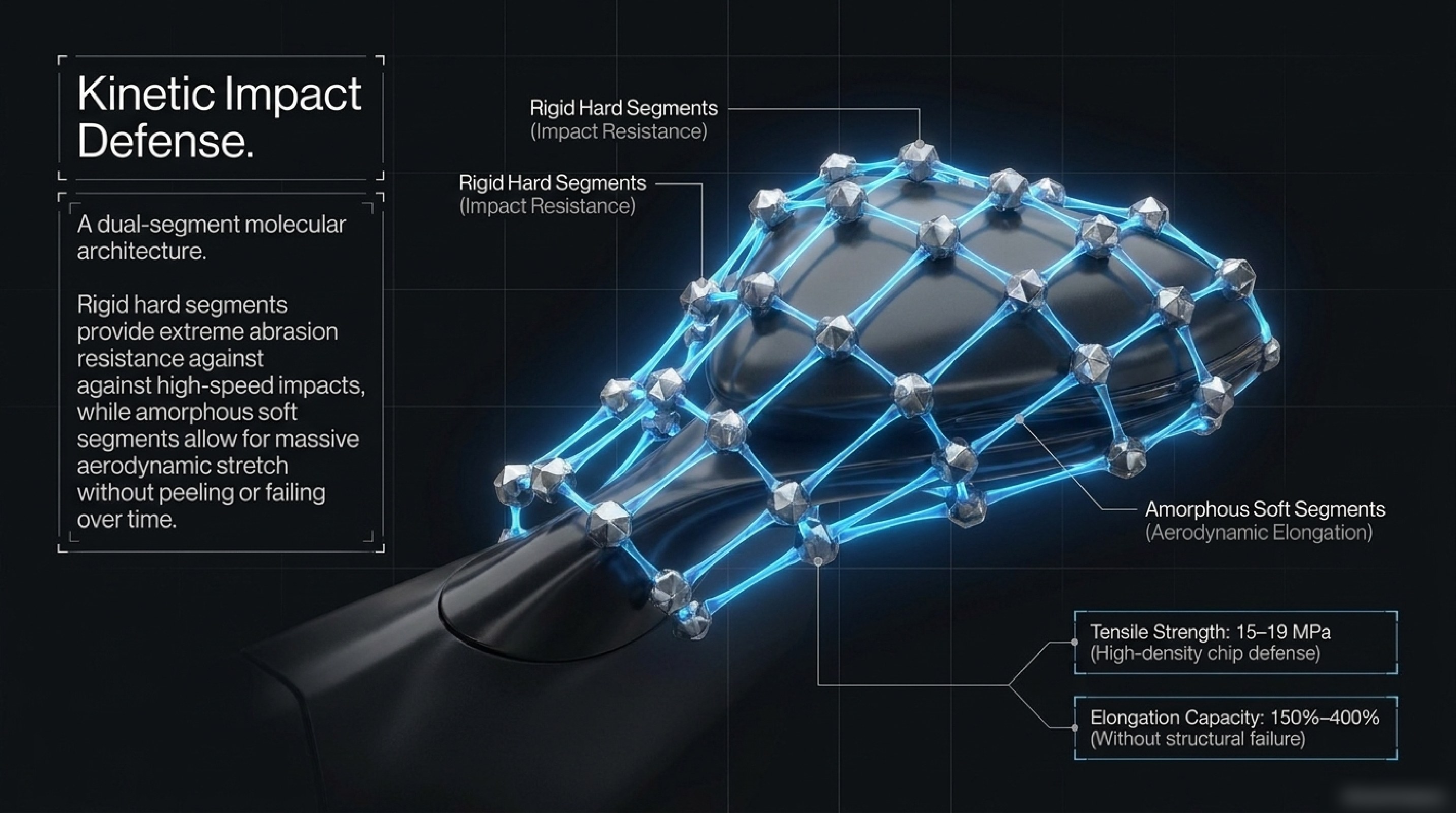
TPU is a linear block copolymer built from two molecular segments with opposite jobs. Rigid hard segments act as physical crosslinks, providing extreme abrasion resistance against high-speed impacts — 15–19 MPa of tensile strength for high-density chip defense. Amorphous soft segments allow massive aerodynamic stretch, giving 150%–400% elongation capacity without structural failure, so the film flexes with the body panel instead of peeling away from it.
Thermal self-healing kinetics
Self-healing is a kinetic process, not a marketing claim. The soft segments have a base glass transition temperature between -40°C and -10°C, which keeps them rigid at rest. Exposed to environmental heat — direct sunlight at 45°C–65°C or engine warmth — the soft segments gain thermodynamic mobility, and the polymer chains diffuse back together through a process called reptation, re-bonding to close scratch boundaries within an activation window of 40°C–80°C. Read the self-healing science.
The hydrophobic matrix: a co-extruded topcoat
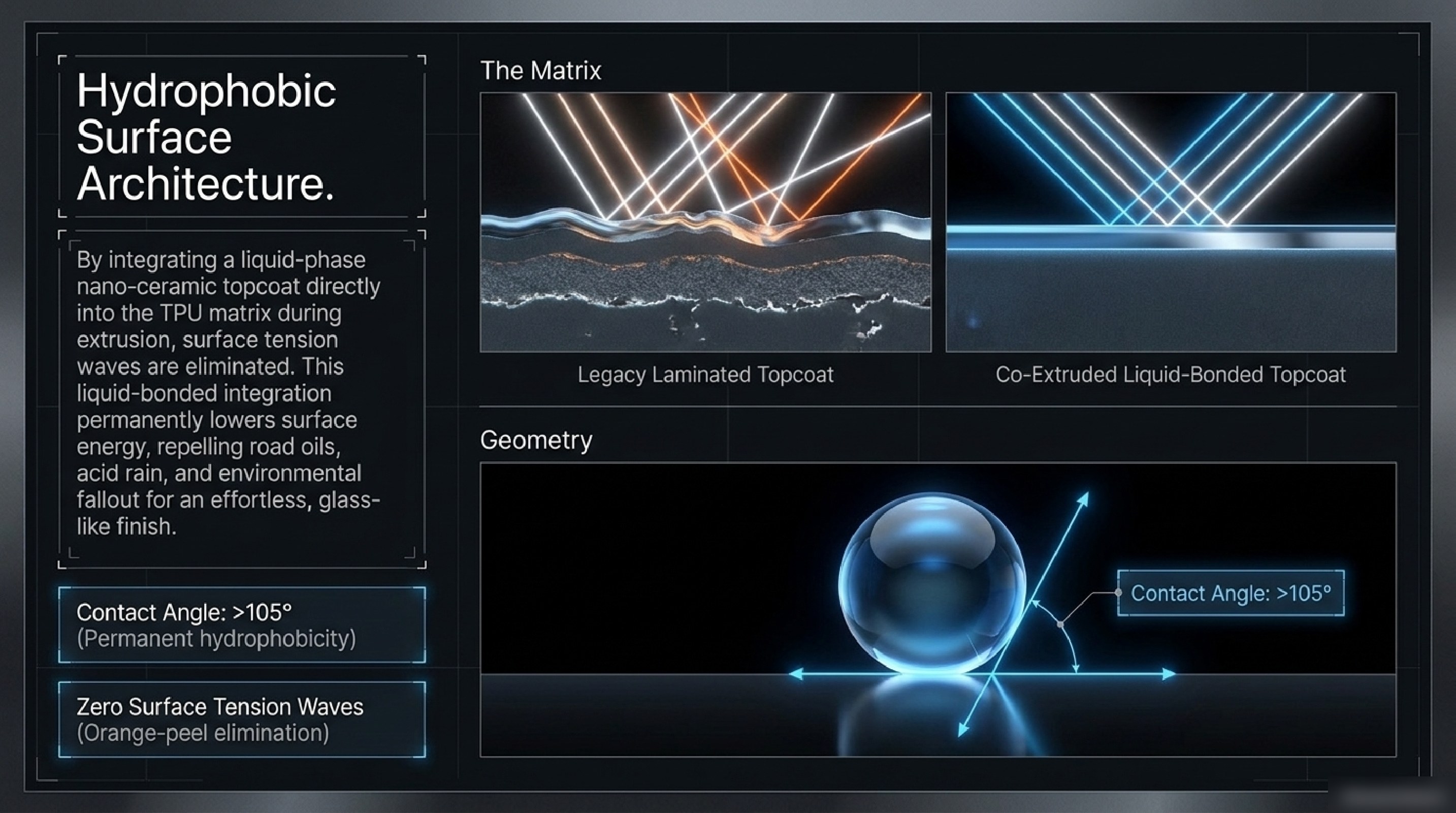
The finish is built in at the molecular level, not sprayed on after. Integrating a liquid-phase nano-ceramic topcoat directly into the TPU matrix during extrusion eliminates surface tension waves entirely — the orange-peel texture that legacy laminated topcoats leave behind. This liquid-bonded integration permanently lowers surface energy, holding a water contact angle above 105° to repel road oils, acid rain and environmental fallout for an effortless, glass-like clean.
Ready to wrap?
Get a free, no-obligation quote for your vehicle — color change, fleet graphics or paint protection.